Digital Signage Trends Businesses Must Watch in 2026
Digital signage trends in 2026 focus on automation, relevance, energy efficiency, and measurable business impact. As we move into 2026, it is important for businesses to understand these trends to adapt their strategies, remain competitive, and identify new growth opportunities.
Digital signage has moved well beyond screens and static content. Today it shapes visitor flow, improves customer service, and drives revenue.
With advancements like AI-driven content creation, context-aware messaging, efficient power management, and ROI tracking, digital signage is becoming a strategic business tool and not just a visual add-on.
This guide covers the 8 trends your business should focus on in 2026.
What Digital Signage Trends Should Businesses Watch in 2026?
Digital signage trends in 2026 include:
- AI-powered content automation and audience targeting
- Context-aware and time-based messaging
- Cloud-based screen management
- Energy-saving power management
- Data-driven performance and ROI tracking
- Interactive and touchless experiences
- QR code and screen-to-mobile engagement
- Simple and secure CMS platforms
1. AI-Powered Content Automation and Audience Targeting
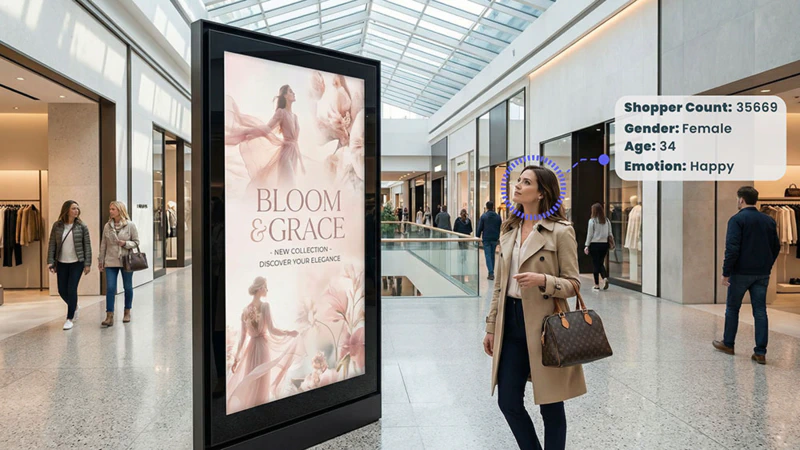
EasySignage Audience Targeting lets businesses automate content delivery by targeting the right audience at the right time. Screens can display different content based on audience type, ensuring messaging is always effective.
In 2026, businesses will increasingly rely on AI to reduce manual work. AI helps businesses create smarter, faster, and more relevant digital signage content with less effort.
Why it matters:
- Saves time on manual updates
- Keeps messaging relevant to each viewer
- Improves engagement without extra effort
Read more about Audience Targeting in EasySignage .
2. Context-Aware and Time-Based Messaging
Context-aware digital signage adjusts content automatically based on triggers like time of day, location, weather, or events. This ensures that messages are always relevant to the viewer.
Common triggers include:
- Time of day: morning promotions vs evening offers
- Location: different messages per store or zone
- Events or dates: seasonal campaigns, holidays, local events
Why it matters: The right message at the right moment performs better than a generic one. Context-aware content does this on autopilot.
Read more: Why Scheduled Content Makes Digital Signage More Effective .
3. Cloud-Based Screen Management
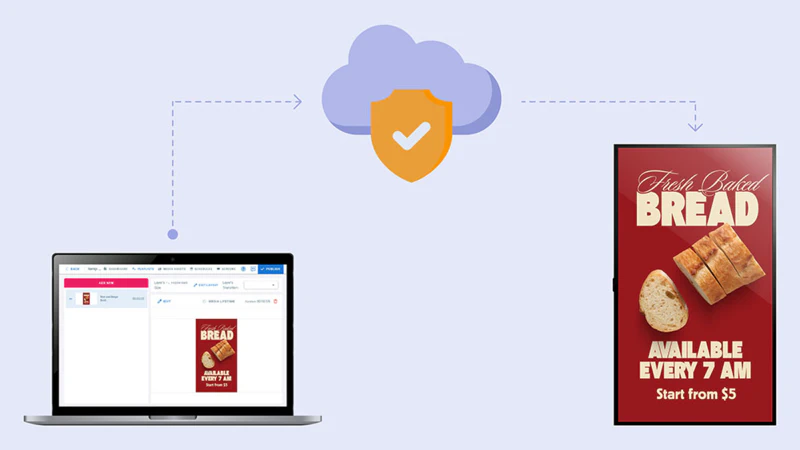
Cloud-based digital signage platforms enable businesses to manage multiple screens remotely from a single dashboard. Content can be updated instantly, and screens across locations can be controlled without on-site maintenance.
In 2026, cloud management like EasySignage is essential for multi-location control and scalability. The cloud is also secure by design when paired with the right safeguards. EasySignage protects customer environments with role-based access, secure authentication, and controlled user permissions, ensuring content, screens, and data remain protected as businesses scale in the cloud.
With cloud signage you can:
- Update content instantly across all locations
- Remove the need for on-site servers
- Scale from 1 screen to 1,000 without complexity
- Control who can access screens and content
- Monitor screen status remotely
Security is built in. EasySignage uses role-based access, secure login, and permission controls so only the right people can make changes.
Why it matters: Less on-site work, faster updates, and full control from anywhere.
A Beginner’s Guide to Cloud-Based Digital Signage .
4. Energy-Efficient Power Management
Energy efficiency is now a business priority, not a nice-to-have. Power management enables automated screen-on/off scheduling and usage control. This trend reduces energy costs, extends screen lifespan, and supports sustainability goals.
Key features:
- Auto on/off schedules: screens power down outside business hours
- Brightness control: dim screens during low-traffic periods
- Remote override: adjust from anywhere without visiting the site
Why it matters: Lower electricity bills, longer screen lifespan, and progress toward sustainability goals.
How to Use Power Management in EasySignage .
5. Data-Driven Performance and ROI Tracking
Guesswork is out. In 2026, businesses expect to see proof that their signage is working.
EasySignage’s AI Audience Analytics shows you:
- How many people viewed each screen
- Which content performed best
- Campaign ROI by location or time period
Why it matters:
- Marketing teams can justify signage budgets
- Content decisions are based on data, not assumptions
- Signage becomes part of the wider analytics stack
Read more about EasySignage Audience Analytics .
6. Interactive and Touchless Digital Signage Experiences
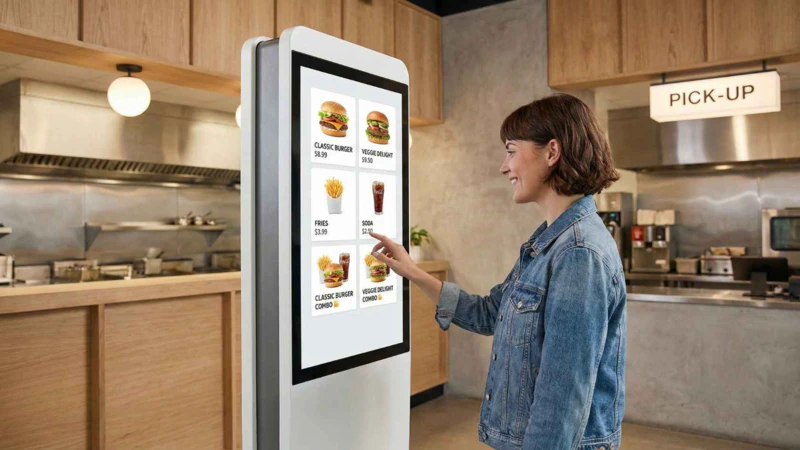
Interactive signage lets users engage directly with screens. Two main options are gaining ground:
- Touch screens: familiar and intuitive for navigation and self-service
- Touchless interaction: gesture-based or QR-triggered, ideal for hygiene-sensitive environments
Both approaches make signage more than a passive display. They turn screens into two-way communication tools.
Why it matters: Interactive signage boosts engagement and gives users a reason to stop and pay attention.
How to use the touchscreen feature in EasySignage .
7. QR Code Interaction and Screen-to-Mobile Engagement
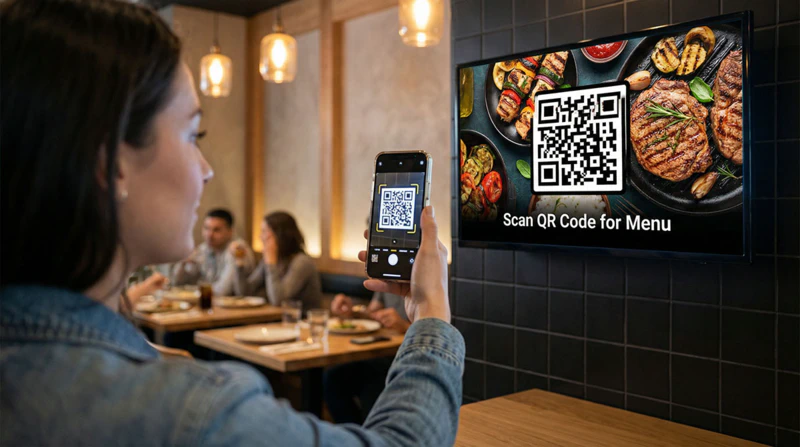
QR codes bridge the gap between your screen and your customer’s phone.
What you can do with QR codes on signage:
- Link to a digital menu or product page
- Drive sign-ups, offers, or form submissions
- Track scan rates to measure campaign performance
- Enable contactless ordering or payments
Why it matters: QR codes turn a passive screen into a measurable conversion tool at zero extra hardware cost.
How to Add QR Codes to Your Digital Signage .
8. Simple and Secure Digital Signage CMS Platforms
The best signage platform is one your team can actually use. In 2026, simplicity and security go hand in hand.
What to look for in a CMS:
- Easy onboarding: no technical skills required
- Intuitive interface: content creation and scheduling in minutes
- Role-based access: control who can edit, publish, or view
- Reliable uptime: screens always display the right content
EasySignage is built around this balance. It is easy enough for non-technical users and secure enough for enterprise deployments.
Why it matters: Faster deployment, fewer mistakes, and stronger protection for your screens and content.
How Can Businesses Prepare for Digital Signage Trends in 2026?
Preparing for digital signage in 2026 means adopting efficient, intelligent, and measurable solutions that deliver real business value.
Actionable Steps:
Audit your current setup: identify which screens, content, and processes need improvement
Move to cloud management: centralise control and make remote updates easy
Automate scheduling and power control: save time and cut energy costs
Use context-aware content: match messages to audience, time, and location
Track performance: use analytics to see what works and optimise over time
Summary: Digital Signage Trends in 2026
Digital signage in 2026 is smarter, more efficient, and more measurable than ever.
The businesses that will stand out are the ones that:
- Use AI to personalise and automate content
- Manage screens from the cloud
- Reduce energy waste with smart scheduling
- Prove ROI with real analytics
- Give audiences a reason to engage
By implementing these trends with a platform like EasySignage, you can turn every screen into a dynamic, data-driven communication tool that engages audiences, drives revenue, and prepares your operations for 2026 and beyond.