Digital Signage Trends Businesses Must Watch in 2026
Digital signage trends in 2026 focus on automation, relevance, energy efficiency, and measurable business impact. As we move into 2026, it is important for businesses to understand these trends to adapt their strategies, remain competitive, and identify new growth opportunities.
Digital signage has evolved beyond just screens and content. In 2026, it will be transformed into a full experience that affects visitor flow, improves customer service, and boosts revenue generation.
With advancements like AI-driven content creation, context-aware messaging, efficient power management, and ROI tracking, digital signage is becoming a strategic business tool rather than just a visual add-on.
This guide highlights the most important digital signage trends businesses should focus on in 2026!
What Digital Signage Trends Should Businesses Watch in 2026?
Digital signage trends in 2026 include:
- AI-powered content automation and audience targeting
- Context-aware and time-based messaging
- Cloud-based screen management
- Energy-saving power management
- Data-driven performance and ROI tracking
- Interactive and Touchless Digital Signage Experiences
- QR Code Interaction and Screen-to-Mobile Engagement
- Simple and secure digital signage CMS platforms
1. AI-Powered Content Automation and Audience Targeting
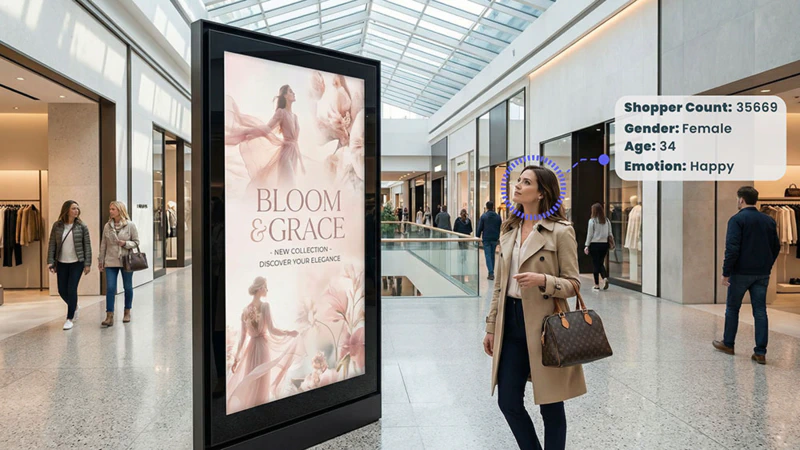
EasySignage Audience Targeting lets businesses automate content delivery by targeting the right audience at the right time. Screens can display different content based on audience type, ensuring messaging is always effective.
In 2026, businesses will increasingly rely on AI to reduce manual work. AI helps businesses create smarter, faster, and more relevant digital signage content with less effort.
Why it matters: Automatic content updates save time and improve engagement with less effort.
Read more about Audience Targeting in EasySignage.
2. Context-Aware and Time-Based Messaging
Context-aware digital signage adjusts content automatically based on triggers like time of day, location, weather, or events. This ensures that messages are always relevant to the viewer.
Examples of context-aware signage:
- Morning vs evening promotions
- Location-based messaging
- Event or date-based campaigns
Why it matters: Context-aware messaging increases engagement by delivering the right content at the right moment without manual updates.
Read more about: Why Scheduled Content Makes Digital Signage More Effective.
3. Cloud-Based Screen Management
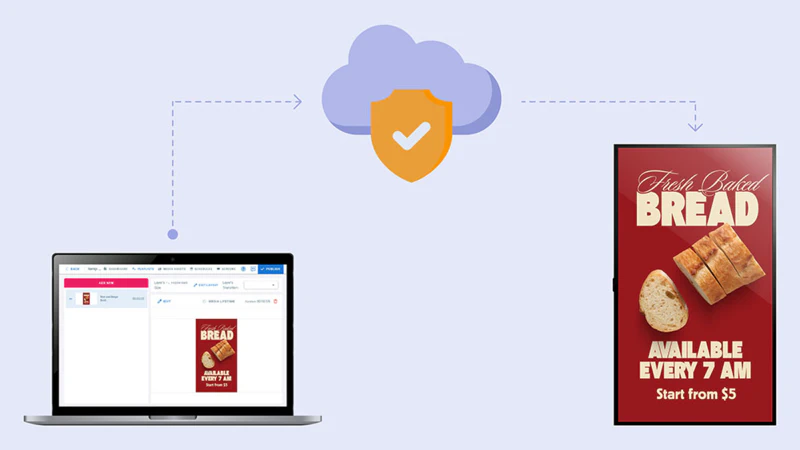
Cloud-based digital signage platforms enable businesses to manage multiple screens remotely from a single dashboard. Content can be updated instantly, and screens across locations can be controlled without on-site maintenance.
In 2026, cloud management like EasySignage is essential for multi-location control and scalability. The cloud is also secure by design when paired with the right safeguards. EasySignage protects customer environments with role-based access, secure authentication, and controlled user permissions, ensuring content, screens, and data remain protected as businesses scale in the cloud.
Cloud signage advantages:
- Manage hundreds of screens remotely
- No on-site servers
- Instant content updates
- Easier scaling as businesses grow
- Centralised security and access control
Why it matters: Businesses can update content instantly, reduce on-site maintenance, scale securely, and maintain full control over who accesses screens and content.
A Beginner’s Guide to Cloud-Based Digital Signage.
4. Energy-Efficient Power Management
Energy efficiency is now a business priority, not a nice-to-have. Power management enables automated screen-on/off scheduling and usage control. This trend reduces energy costs, extends screen lifespan, and supports sustainability goals.
Why it matters: Smart power management saves energy and reduces electricity bills while maintaining consistent performance.
How to Use Power Management in EasySignage.
5. Data-Driven Performance and ROI Tracking
EasySignage’s AI-Audience Analytics provides insights into screen performance, content engagement, and campaign ROI. Businesses can see how audiences interact with screens and make data-driven decisions to optimise content and improve overall results.
Why this trend is growing:
- Marketing teams need ROI proof
- Data-driven decisions outperform guesswork
- Signage becomes part of the analytics stack
Why it matters: Analytics turns digital signage into a measurable, optimised business tool that drives ROI.
Read more about EastSignage Audience Analytics.
6. Interactive and Touchless Digital Signage Experiences
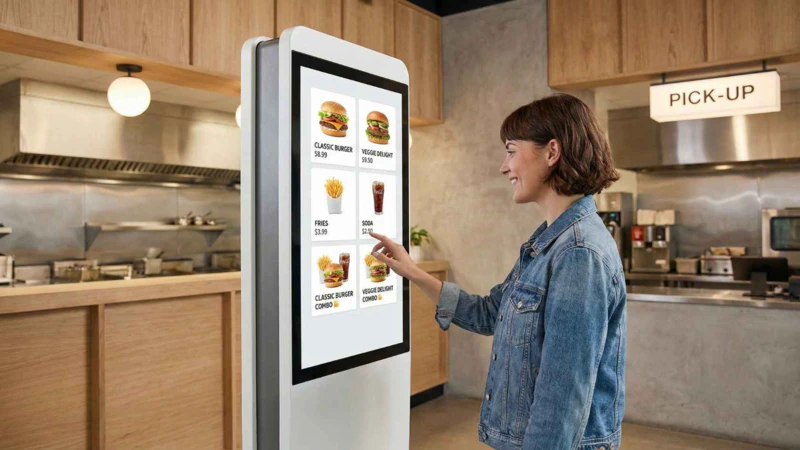
Interactive digital signage allows users to engage using touch screens, gestures, or mobile devices. Touch screens provide a familiar and intuitive way to navigate content, while touchless methods ensure safety and convenience.
Why it matters: Interactive signage makes digital signage more engaging and accessible.
How to use the touchscreen feature in EasySignage.
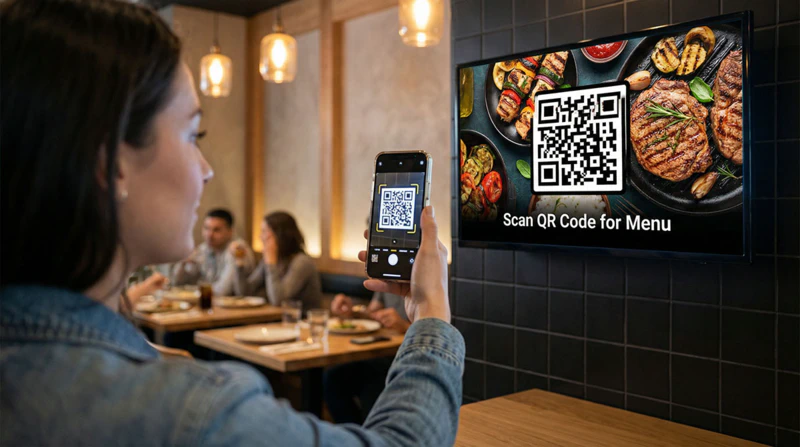
7. QR Code Interaction and Screen-to-Mobile Engagement
QR codes connect digital signage screens to mobile actions like menus, forms, or promotions. In 2026, QR interaction is a standard bridge between physical screens and digital engagement.
Why it matters: QR code integration turns screens into measurable conversion tools.
How to Add QR Codes to Your Digital Signage.
8. Simple and Secure Digital Signage CMS Platforms
Businesses expect digital signage CMS platforms to be easy to use while maintaining strong security and reliability. Simplicity reduces errors and speeds up content deployment, while security ensures safe operations.
EasySignage delivers an intuitive, secure platform that combines both ease of use and robust protection. Simplicity and control are now competitive advantages.
Why it matters: Faster onboarding, fewer errors, and stronger protection of content and systems.
How Can Businesses Prepare for Digital Signage Trends in 2026?
Preparing for digital signage in 2026 means adopting efficient, intelligent, and measurable solutions that deliver real business value.
Actionable Steps:
Audit your current signage setup to identify gaps and opportunities.
Move fully to cloud-based management for centralised control and scalability.
Automate scheduling and power control to save time and reduce energy costs.
Focus on context-aware and audience-targeted content for maximum relevance.
Track performance and ROI using analytics to optimise campaigns.
Conclusion: Stay Ahead with Digital Signage Trends
Digital signage in 2026 is more than just screens; it’s an intelligent, measurable business tool. From AI-powered content automation and audience targeting to context-aware messaging, cloud management, energy efficiency, and interactive experiences, businesses that adopt these trends can boost engagement, improve return on investment (ROI), and streamline their operations.
To stay competitive, audit your setup, use cloud platforms, automate scheduling and power management, focus on context-aware content, and track performance with analytics.
By implementing these trends with a platform like EasySignage, you can turn every screen into a dynamic, data-driven communication tool that engages audiences, drives revenue, and prepares your operations for 2026 and beyond.